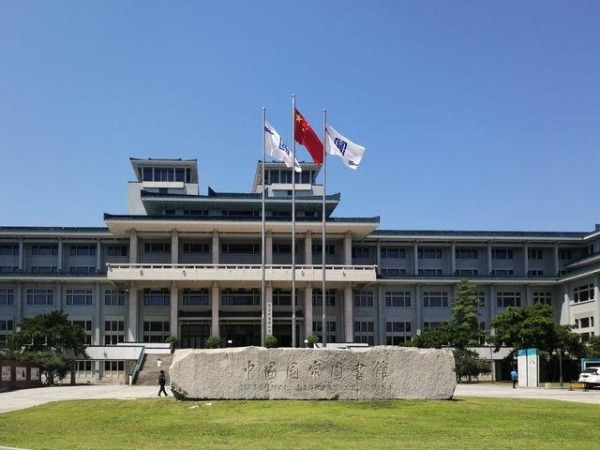
National Library of China
Introduction
The National Library of China (NLC) is the largest library in Asia and one of the most significant libraries globally, housing an extensive collection of books and cultural records. Situated in Beijing, the library serves as a major repository of Chinese literature and history, holding millions of volumes, including some of the world's oldest texts. The library's mission is to preserve the rich cultural heritage of China and make it accessible to the public. With a focus on both traditional and modern services, the NLC is committed to enhancing public access to its vast resources through digitization and international cooperation.
History
The National Library of China was established in 1909, initially named the Capital Library. Over the decades, it has evolved to become the preeminent library in China, reflecting the country's historical, cultural, and educational development. The library's growth paralleled China's modernization, expanding its collections and services to accommodate a growing demand for knowledge and cultural preservation. Significant milestones in its history include the acquisition of rare ancient texts and the establishment of specialized collections that highlight China's intellectual heritage. The library continued to expand its facilities and capabilities throughout the 20th century, embracing technological advancements to improve its offerings.
Collection
The Library boasts one of the world's most comprehensive collections of Chinese literature, manuscripts, and historical documents. It serves as a national repository for Chinese culture, with collections that span ancient to modern times.
Types of Collections
The NLC's collections include over 3 million ancient books and documents, holdings of contemporary Chinese literature, and extensive archives in various formats. The library's collection is categorized into several types, including rare books, genealogies, local gazetteers, maps, and more, covering a wide range of subjects from philosophy to science and art.
Special Collections
Among its special collections is the Yongle Canon, considered one of the most significant ancient encyclopedias, as well as rare works such as early Chinese manuscripts and European books on Chinese philosophy. These special collections are integral to the library's mission of preserving and showcasing Chinese culture and history.
Services
The services offered by the NLC aim to cater to the diverse needs of its users, ranging from researchers to the general public. The library provides access to physical and digital resources, specialized research assistance, educational programs, and cultural exhibitions. The digitization of ancient texts and modern publications ensures broader access to the library's resources, while its online databases enable users worldwide to explore its holdings. The library also engages in various educational and cultural outreach activities, facilitating public lectures, workshops, and exhibitions.
Architecture
The architecture of the National Library of China reflects its historical significance and modern aspirations. The main building, located in Haidian District, Beijing, combines traditional Chinese architectural elements with contemporary design, symbolizing the library's role as a bridge between the past and the present. The library's spaces are designed to accommodate both quiet study and collaborative activities, providing a welcoming environment for visitors and researchers alike.
International Cooperation
The NLC actively engages in international cooperation to enhance cultural exchange and knowledge sharing. It collaborates with libraries and institutions worldwide, participating in joint projects, exhibitions, and cultural programs. These partnerships help to promote understanding and appreciation of Chinese culture and contribute to global library and information science development.








